Food & culture · 5 min read
A first-timer's guide to eating in the medina
The medina is not a food court — it is a working neighbourhood that happens to feed thousands of people a day. Once you understand its rhythm, eating well becomes very easy and very cheap.
Written by the Morocco Together team · 29 July 2026
The daily rhythm
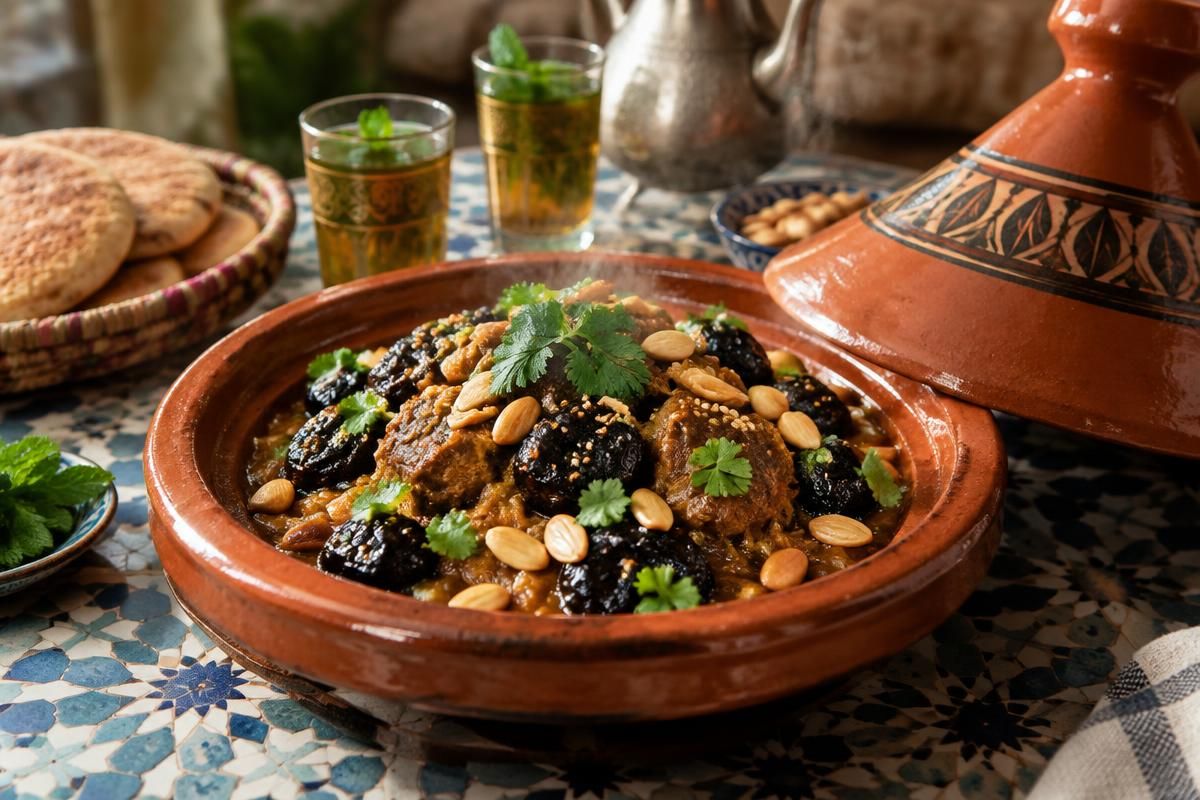
Breakfast is bread, olive oil, amlou or jam with mint tea, usually before 9am. Lunch, between 1pm and 3pm, is the real meal of the day — this is when tagines come out of the coals and when families gather, especially on Friday for couscous. Dinner is later and lighter than most visitors expect: grilled meat, harira soup, a bowl of bissara. Eat with the rhythm and you will eat far better.
Three dishes worth planning a day around
- Friday couscous — steamed three times, served with seven vegetables and a broth poured at the table. Rarely available on other days in home-style kitchens.
- Tanjia marrakchia — a Marrakech men's dish: beef or lamb, preserved lemon, cumin and saffron sealed in a clay urn and slow-cooked overnight in the ashes of the hammam furnace. Order it a day ahead.
- Mechoui — whole lamb roasted in an underground pit, sold by weight in the morning near Jemaa el-Fna and gone by early afternoon.
How to spot a good stall
Look for one dish, a queue of locals, high turnover and a cook who is visibly working rather than calling out to tourists. Food that moves fast is food that is fresh.
Reading a spice stall
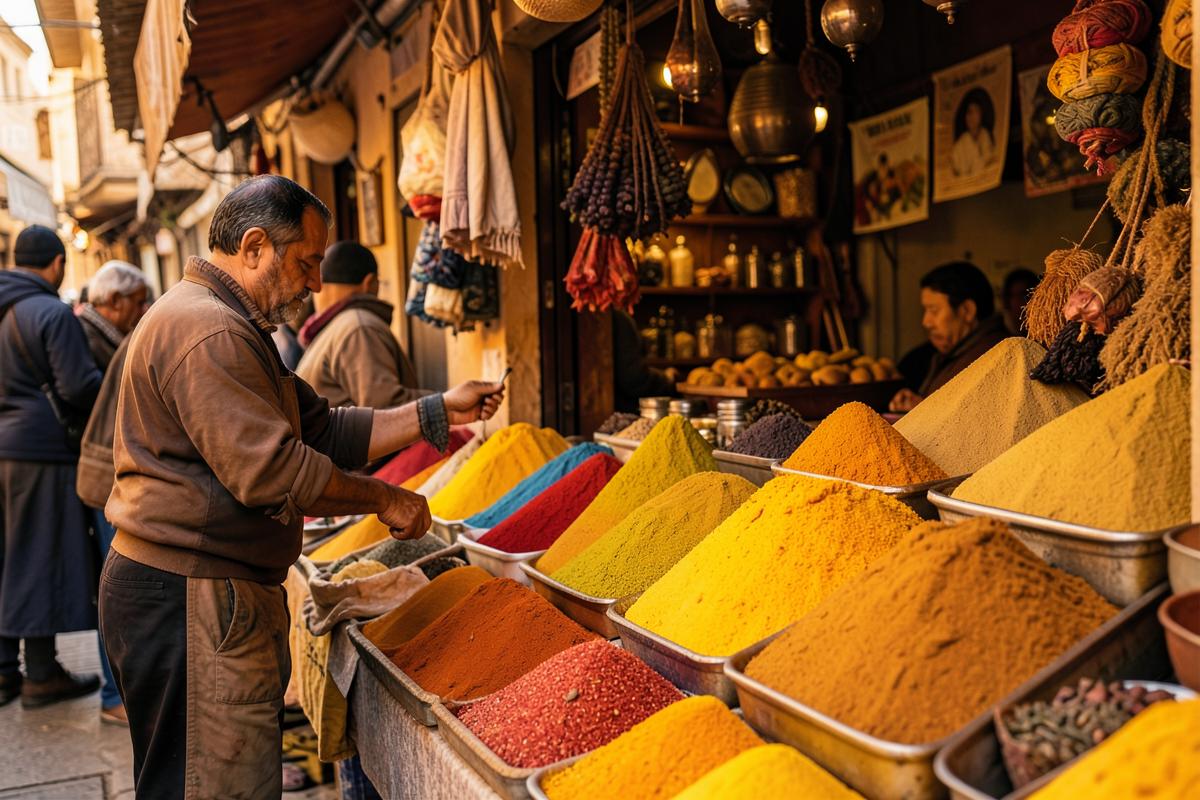
The pyramids of powder in the souk look identical but are not. Real saffron comes as red threads, never as bright orange powder, and it is sold by the gram at a price that reflects hand-harvesting. Ras el hanout is a house blend — every shop's version differs, so taste before you buy. Ask for a small quantity, smell it, and pay in cash. A good vendor will happily explain the blend; one who refuses is selling colouring.
Worth bringing home
- Ras el hanout from a blender you actually tasted
- Cumin and sweet paprika — cheap, fresh and far better than supermarket versions
- Argan oil, culinary grade, from a women's cooperative with visible pressing
- Preserved lemons, sealed properly for the flight
Eating street food without regretting it
Simple rules that work
- Eat where the queue is local and the turnover is fast
- Choose food cooked to order in front of you over anything sitting warm
- Peel your own fruit; be cautious with pre-cut salads early in a trip
- Drink bottled or filtered water for the first days, and go easy on ice
- Give your stomach 48 hours before the adventurous options — snail soup and sheep's head can wait
- Carry rehydration salts and hand gel; both are sold in every pharmacy
Prices, tipping and haggling
A bowl of harira costs a few dirhams; a street-side sandwich or a plate of grilled meat is a handful more; a full riad dinner with several courses is still modest by European standards. Food prices are generally fixed — haggling belongs in the craft souks, not at a soup stall. Round up or leave five to ten percent in restaurants, and a few dirhams for a café tea.
The best meal on most of our trips is not in a restaurant at all. It is lunch in a family home in the Atlas, cooked by someone who has made that tagine ten thousand times.
Vegetarians and dietary needs
Vegetable tagines, zaalouk, taktouka, bissara, lentils and fresh bread make vegetarian travel easy — though ask whether the broth is meat-based. Vegan and gluten-free travel needs a little more planning outside the cities; tell us in advance and we brief the riads and drivers on your route.
Ready when you are
Let's turn this into your itinerary
Tell us your dates, your pace and how you like to travel. A trip designer in Marrakech replies within 24 hours with a first route and a clear price — no deposit until you are happy with it.