Before you go · 8 min read
Morocco Travel Requirements for US Citizens in 2026: Visa, Passport & Entry Guide
US citizens traveling to Morocco for tourism do not need a visa for stays of 90 days or less. Here is what you do need before you fly.
Written by the Morocco Together team · 28 September 2026
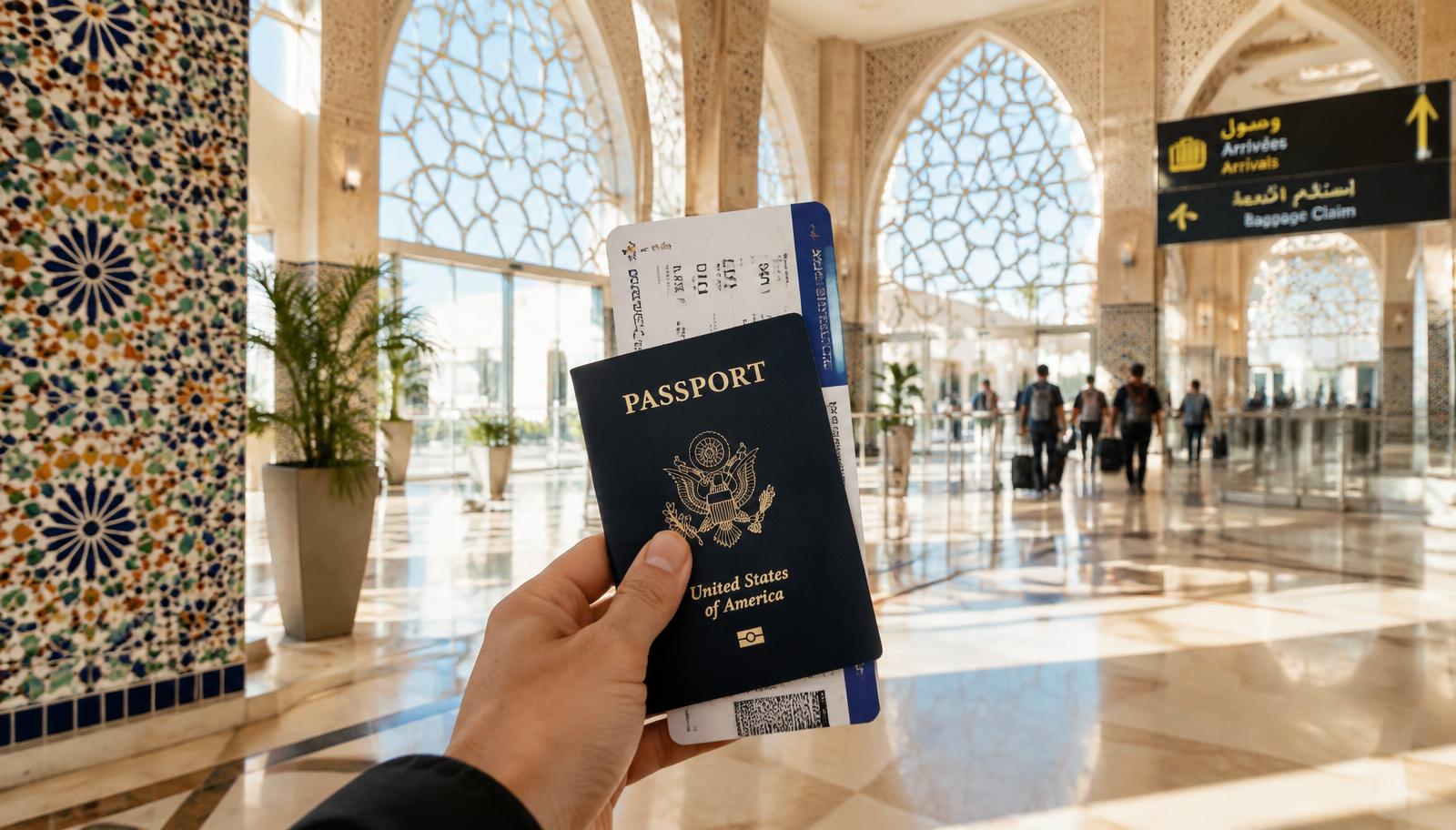
The short answer: US citizens traveling to Morocco for tourism do not need a visa for stays of 90 days or less. You do still need a passport and travel documents that meet Morocco's entry requirements, so it is worth checking them well before departure.
The good news is that Morocco is relatively straightforward for American travelers. With a valid passport and a few practical documents ready, most arrivals take little more than passport control, a stamp and a walk through customs.
Visa Requirements for US Passport Holders
- US citizens do not need a tourist visa for stays of 90 days or less.
- The 90-day allowance applies to tourism and other short visits.
- The final decision on admission, and on the length of stay granted, is made by Moroccan border authorities.
- If you plan to stay longer than 90 days, check the correct procedure with Moroccan authorities before you travel.
Note that the US Visa Waiver Program is not relevant here: it covers travel to the United States, not entry into Morocco.
At a glance
- Visa required for tourism: No
- Maximum visa-free stay: 90 days
- Passport required: Yes
Passport & Entry Document Checklist
Passport validity (required)
Current U.S. Department of State guidance says your passport must be valid at the time of entry, have at least six months of validity remaining when you enter Morocco, and have at least one blank page for the entry stamp.
Return or onward travel (may be requested)
Keep your return or onward flight details easy to reach. Border officials may ask about your travel plans, and having them ready makes the conversation quick. This is practical preparation rather than a separately published visa rule.
Accommodation details (recommended)
- Hotel or riad booking confirmation
- Your tour itinerary
- Local contact details
These are sensible documents to carry, not separate visa requirements.
Travel insurance (recommended)
Travel insurance is strongly recommended for any international trip, particularly to cover medical expenses, cancellations and unexpected disruptions. It is not listed as a mandatory Moroccan entry requirement.
Customs, Currency & Health Guidelines
Currency
The Moroccan dirham (MAD) is a closed currency, so you will usually obtain it after arrival. Under Morocco's current foreign-exchange regulations, foreign currency and negotiable payment instruments valued at 100,000 MAD or more must be declared to Moroccan customs when entering the country. For amounts below 100,000 MAD, the declaration is optional, although keeping your exchange receipts and documentation is recommended.
Customs
Customs is normally a short step after baggage collection. Declare items when required, and check current Moroccan customs rules before packing anything restricted or regulated.
Health requirements
Current U.S. Department of State guidance says no vaccinations are required for entry to Morocco, and no COVID-19 test or vaccine is listed as an entry requirement. Health and entry policies can change, so check the latest official guidance shortly before departure.
Driving and Local Regulations for Americans
If you plan to drive yourself, travel with your valid US driver's license, the rental-car documentation and insurance that is valid in Morocco. An International Driving Permit (IDP) may be required or useful depending on your circumstances and rental provider, so confirm with them before you book.
- Moroccan traffic can feel very different from driving in the US.
- Mountain and rural roads require extra attention.
- Avoid driving unfamiliar roads at night when possible.
- For a multi-city itinerary, a local private driver is often more convenient than self-driving.
What Happens When You Arrive in Morocco?
- 1. Passport control
- 2. Entry stamp — check that your passport has been stamped correctly
- 3. Baggage collection
- 4. Customs
- 5. Continue to your transfer or tour
The border authority determines admission and the period of stay you are permitted.
Morocco Travel Requirements Checklist for US Citizens
Official entry requirements
- Valid US passport
- At least 6 months passport validity at entry
- At least 1 blank passport page
- No tourist visa required for stays up to 90 days
Recommended travel preparation
- Return or onward travel information
- Accommodation details
- Travel insurance
- Check the latest health requirements before departure
- Driving documents and insurance if renting a car
FAQ
How long can a US citizen stay in Morocco?
US citizens can generally visit Morocco without a tourist visa for up to 90 days.
Do US citizens need a visa for Morocco in 2026?
No, not for tourism stays of 90 days or less, based on current official US travel guidance.
Do I need a COVID test or vaccine to enter Morocco in 2026?
Current U.S. Department of State guidance says no vaccinations are required for entry, and no COVID-19 test or vaccine is listed as required. Verify the latest official requirements before departure.
Can I extend my 90-day stay in Morocco?
If you want to stay beyond your permitted period, contact the relevant Moroccan immigration authorities before your authorized stay expires. Overstaying can create legal and administrative problems and should never be treated as an informal extension.
Plan Your Morocco Trip With Local Experts
Good to know
Travel requirements can change. Always verify the latest official guidance before departure.
Ready when you are
Ready to Discover Morocco?
Once your entry requirements are sorted, the next step is planning a route that makes the most of your time in Morocco. Our local team can create a private or small-group itinerary combining Marrakech, Fes, the Atlas Mountains, historic kasbahs and the Sahara Desert.